The Cilaos thread
One thread, four generations, more than a century of history.
High up in Reunion Island lies a cirque so deeply enclosed that it could only be reached on foot until 1932, along paths cut into the mountain. Cut off from the rest of the world for decades, Cilaos ended up inventing its own language of thread: an embroidery found nowhere else.
A young woman, a thread, a world to invent
It all begins with Angèle Mac-Auliffe. Born in 1877 in the neighbouring cirque of Salazie, she lost her mother at birth and grew up, like all the girls of her time, learning white embroidery to prepare her trousseau. When her father, a doctor, took charge of the thermal baths in Cilaos, Angèle followed him. She was barely out of her teens, in a village still isolated from everything.
Self-taught, she devoured books on needlework and drew inspiration from Canary Islands lace. Then she began inventing her own patterns: imaginary openwork flowers, as if the linen itself had burst into bloom. At 23, she opened a small workshop and passed on her skills to around twenty young women from the cirque.
She would only have eight years to give it everything. A measles epidemic took her in 1908, when she was barely 30. But what she had sown did not die with her.
A thread that never broke
After her death, the nuns of the Cilaos workroom took up the torch and trained new embroiderers. Then the baton passed to the families of the cirque: from mother to daughter, the gesture was handed down, while Cilaos remained one of the most remote villages on the island.
In 1983, an association was created to safeguard this embroidery, which had become an art form in its own right, known as the "jour de Cilaos". A Maison de la Broderie opened in the heart of the village. Over the decades, several Cilaos embroiderers earned the coveted title of Meilleure Ouvrière de France (MOF, Best Craftswoman in France), a recognition that has helped make this craft known far beyond the island.
Colette, heir to the gesture
It's in this tradition that Colette Turpin grew up. Born in Cilaos, she learned to embroider as a little girl, alongside her mother. More than forty-five years later, the needle has never left her hands. In 2004, a daisy pattern earned her the title of Meilleure Ouvrière de France in turn.
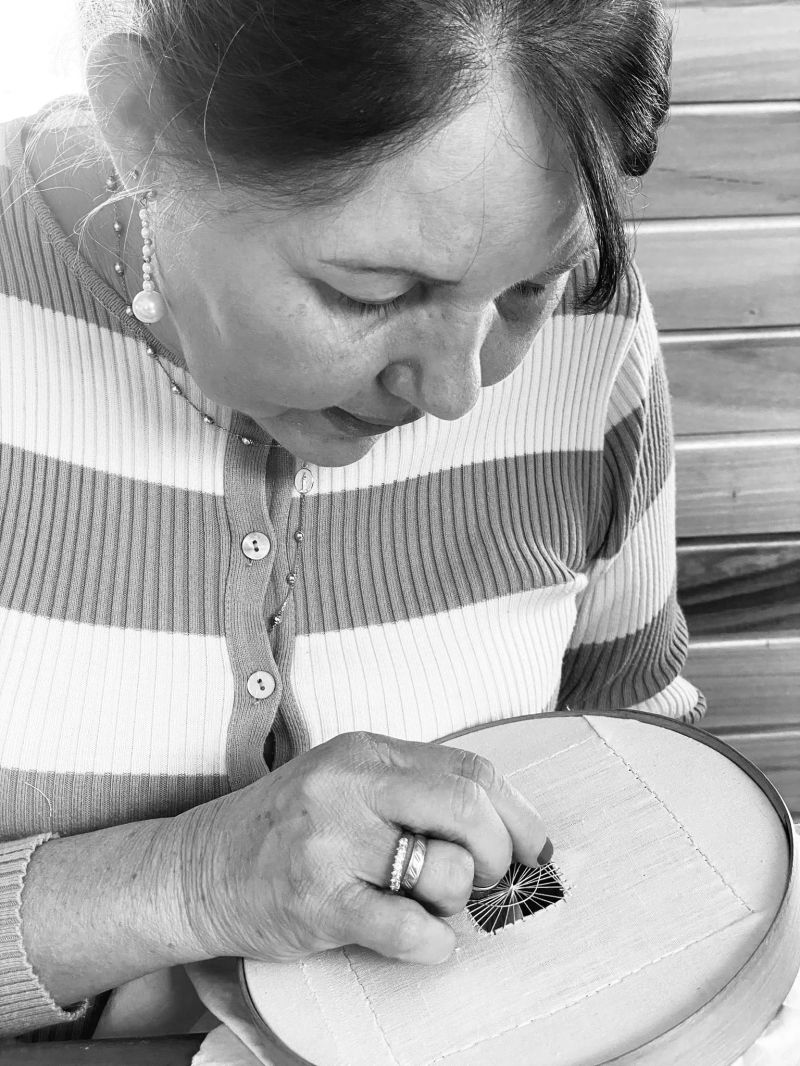
As luck would have it, today she embroiders and teaches in her house at the entrance to the village, on a street named after that very flower: rue des Pâquerettes (Daisy Street).
She says it herself, with a hint of worry: few young people today take up a trade that, on its own, doesn't provide a living. Perhaps that's the best reason to come and sit beside her, to make this thread last a little longer.
Between lace and embroidery
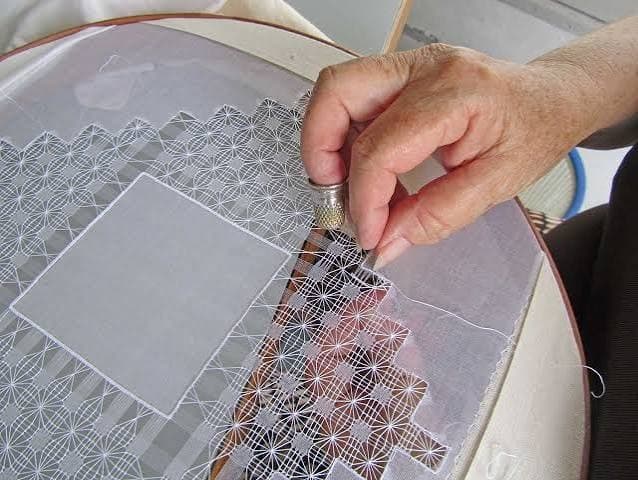
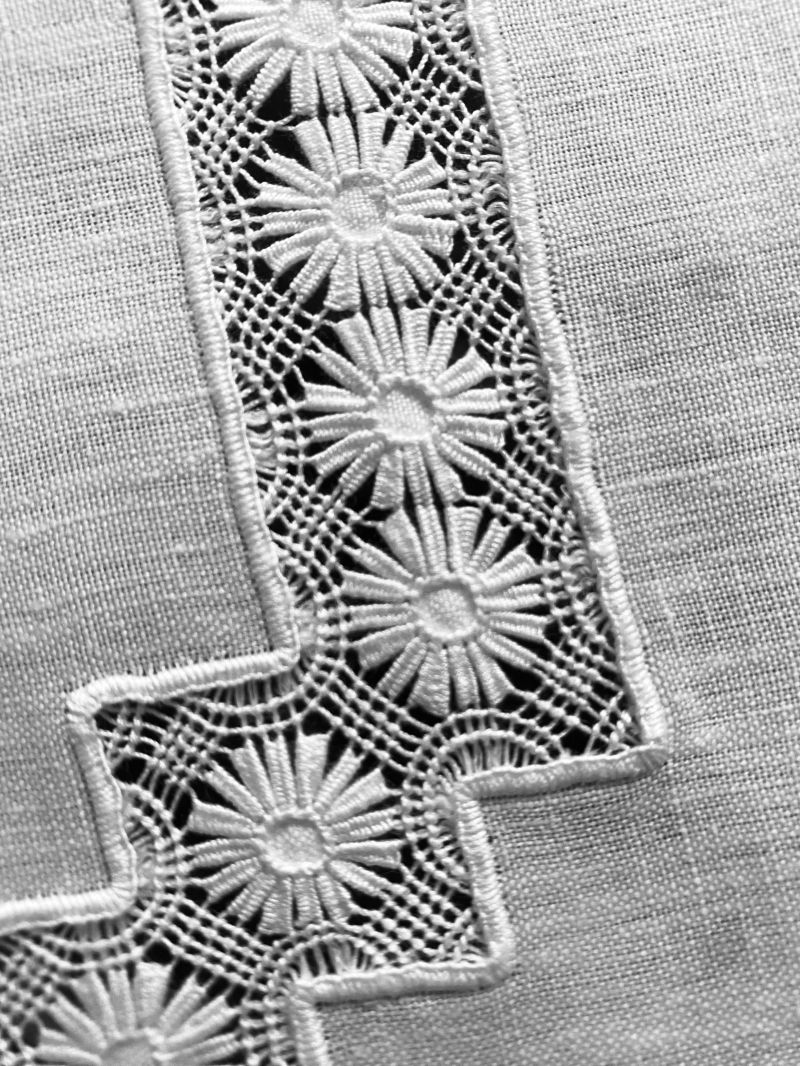
Look closely at a piece of jour de Cilaos and you'll immediately understand what makes it unique. Threads are pulled out of the fabric, one by one, to open up an almost transparent weave. Over this crafted emptiness, flowers bloom in radiating stitches, dense and precise, like little suns resting on lace. Nothing is left to chance: every pattern is counted and measured, and started again if the gesture isn't right.
A doily just a few centimetres wide can take weeks of work: a radically slow craft, the opposite of everything our era values. That's exactly why it deserves to be looked at and passed on.
Carrying the thread on, with My Native Family
We're delighted to welcome Colette Turpin to My Native Family. You can now sit down beside her in Cilaos, learn jour de Cilaos straight from her hands, and leave with a little of this century-old gesture in yours.
A new page is being written, never forgetting the women who held the thread before her.
Welcome to the family, Colette. 🧵