The vacoa strand
One leaf, three centuries, a whole Reunionese heritage.
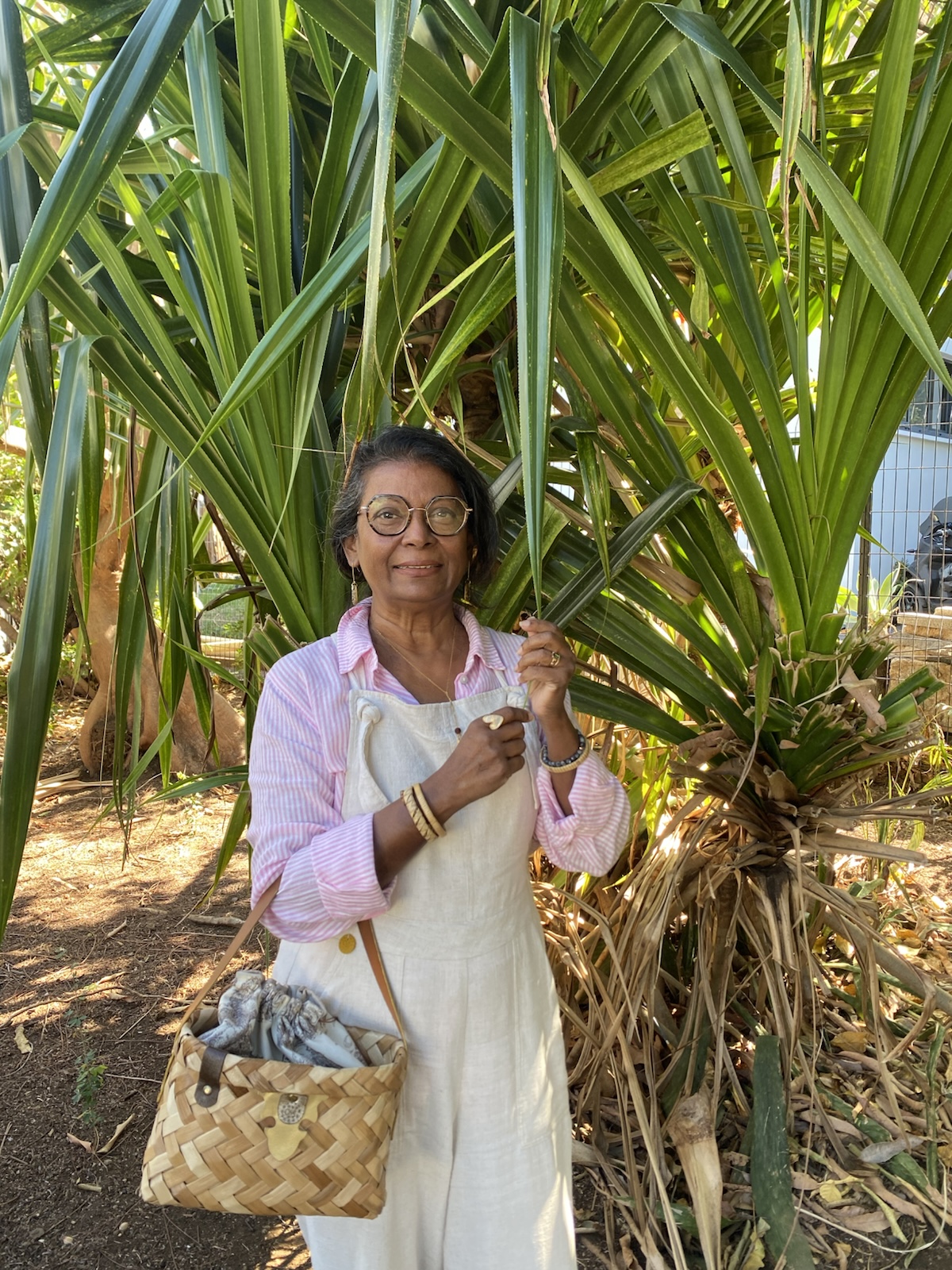
Vacoa grows on the south-east coast of Reunion Island, where the land ends and the salty wind blows in without warning. That's actually why it was planted: for decades, its rows served as windbreaks to protect the vanilla plantations. Nobody put it there for its beauty.
A useful tree before a beautiful one
Vacoa is Pandanus utilis. A dishevelled tree perched on stilt roots, with long leaves edged with thorns. Its leaves covered the roofs of Creole houses until the 1960s. Its heart, the chou de vacoa, is still cooked into curries.
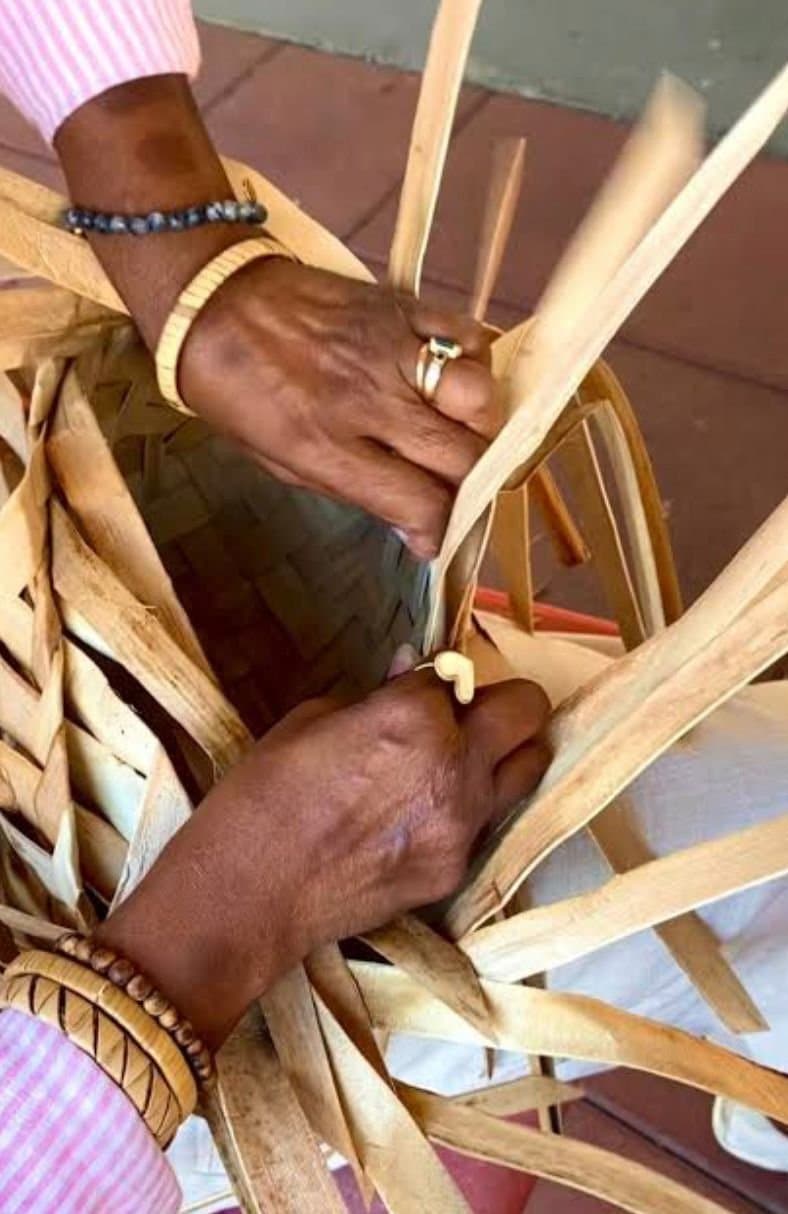
And those same leaves, stripped of their thorns, dried and then softened with a knife, give a supple, light and very strong fibre. Enough to make just about everything a household needed.
Three centuries of containers
The techniques probably come from the Malagasy, among the island's first inhabitants in the 17th century. They were first used to make the essentials: the bertel, an entirely plant-based backpack already seen in an 1830 watercolour; the tente, for going shopping; the flat-bottomed vanne, for sorting rice; mats.
And above all, bales. Big woven baskets in which coffee, sugar and spices were shipped: in 1913, twenty-seven thousand of them left the island for France. Then the jute sack arrived, and that was the end of the story. Today, only lychees still travel in vacoa.
Two strands up, two strands down
The craft was passed down at home, from mother to daughter, before being organised into neighbourhood associations bringing together mostly women.
There are around ten techniques: one-strand, three-strand, lace, cane, shell. The most common fits in a few words every weaver repeats: two strands up, two strands down.
Look closely at a vacoa basket and you'll see that the contrasts don't come from any dye. They're simply darker or speckled leaves, chosen one by one and placed in the right spot. Nothing is written down, nothing is noted: you watch, you get it wrong, you start again.
Sonia, memory found in her hands
This is the transmission Sonia Cazaux carries. A designer by training, she moved back to Reunion Island in 2003 and learned vacoa weaving from a childhood friend.
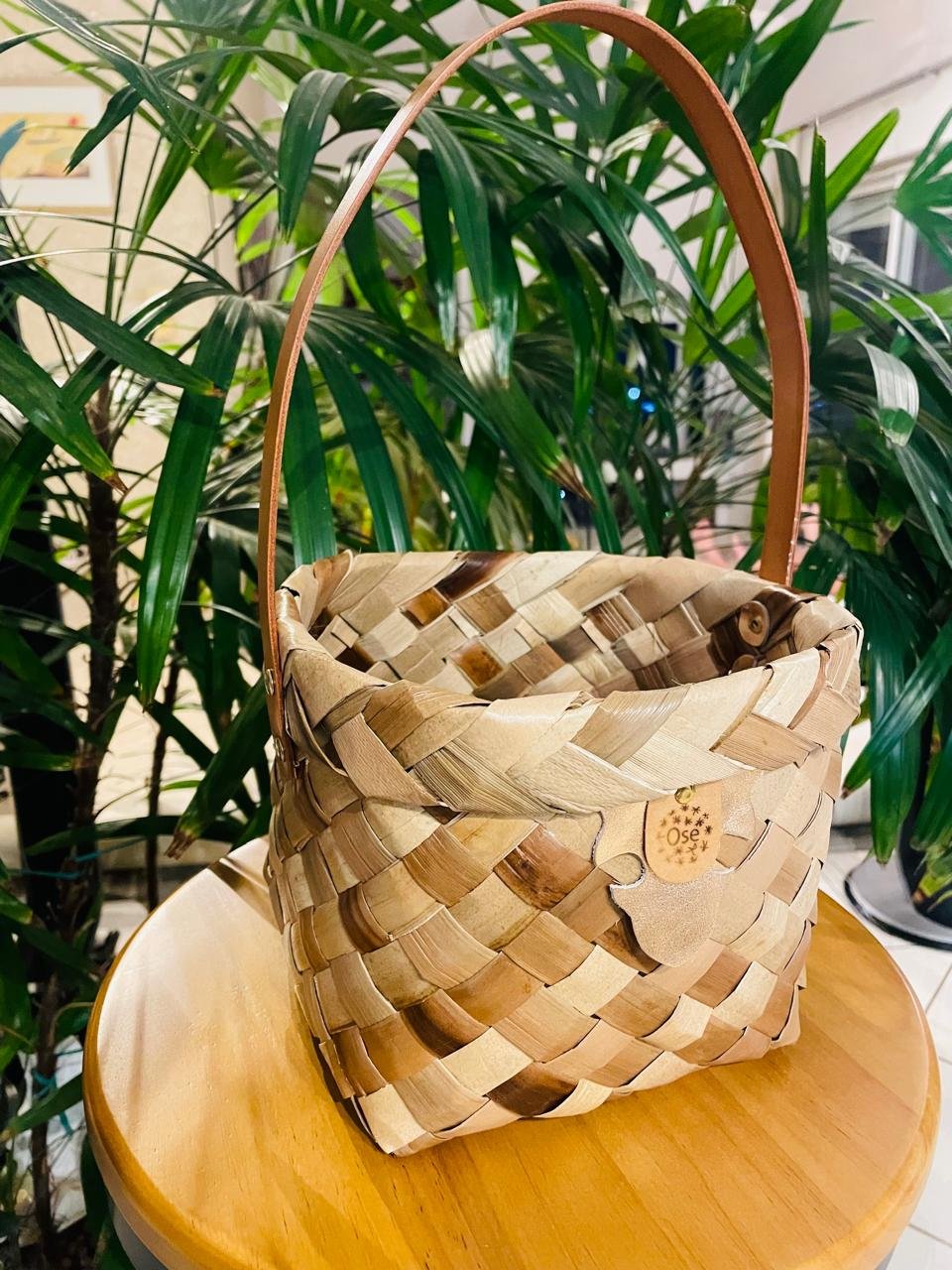
In these hand-woven fibres, she found an older memory, that of a craft born from slavery, and made it her mission: to make sure this skill never dies out. Since 2015, she has been passing on her technique with the same passion she puts into showcasing other women artisans of the island.
A craft that hangs by a thread
Vacoa basketry has been listed in France's inventory of intangible cultural heritage since 2017. It's recognition, not a guarantee.
A single object takes days of work, harvesting included, and often sells for less than it costs to make. Weavers are getting older, and few young people take up a trade that, on its own, doesn't provide a living. That's exactly where everything is at stake: a craft doesn't survive because it's admired, but because it's learned.
Carrying the gesture on, with My Native Family
We're delighted to welcome Sonia to My Native Family. You can now sit down beside her, learn vacoa weaving straight from her hands, and leave with a basket you made yourself — and above all, with the gesture in your body.
Every time someone learns, the thread goes a little further.
Welcome to the family, Sonia. 🌿