Kafrine, Malbar, Yab, Zarabe… the faces of Reunion Island
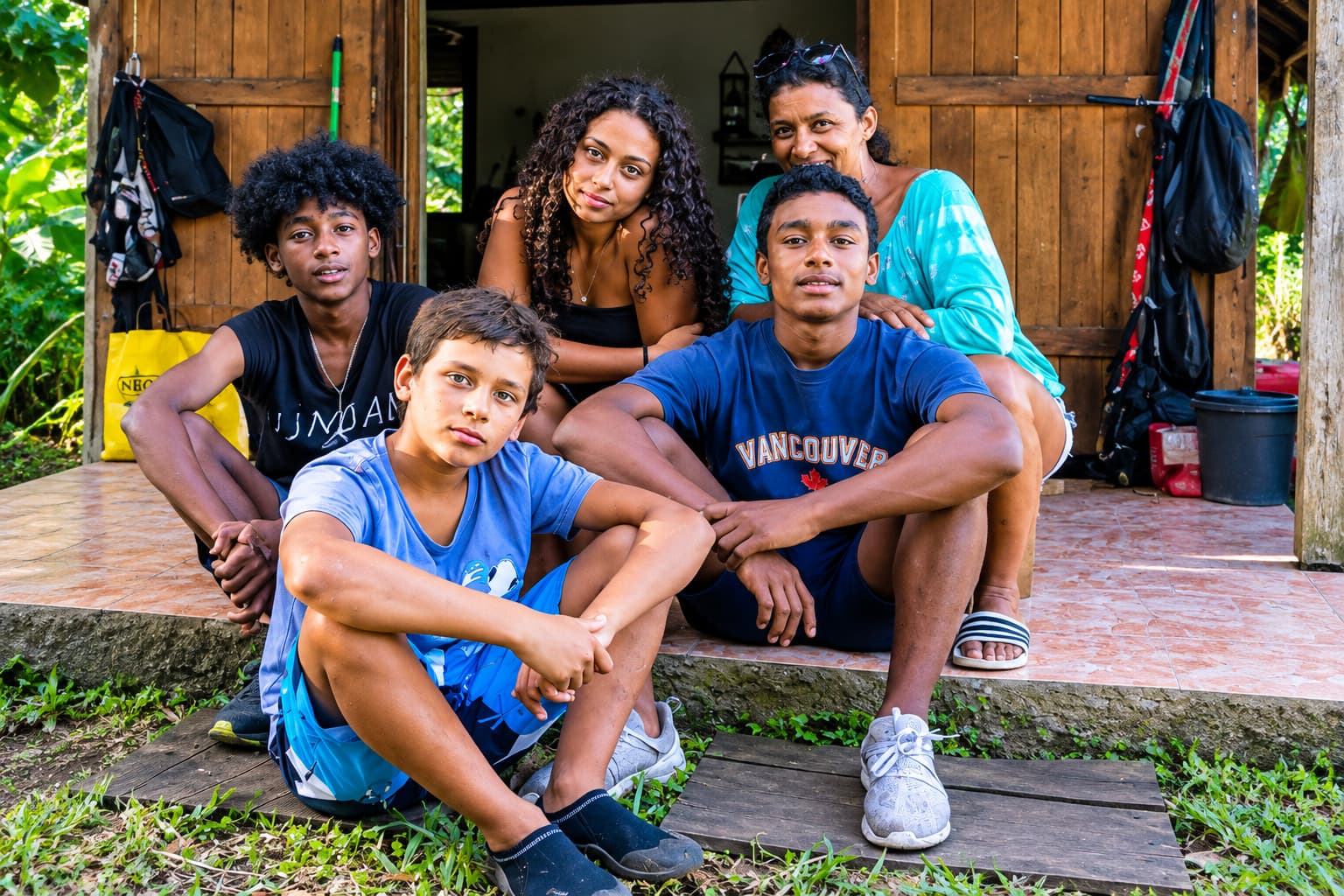
An island with no original people, where everyone comes from somewhere else, and where everyone has become from here.
In Reunion Island, a ten-minute walk down a street in Saint-Denis is enough to pass a church, a Tamil temple, a mosque and a pagoda. Nobody is surprised. That's how the island was built: in successive waves, sometimes chosen, often forced.
When the island was settled in the mid-17th century, it was empty. The first inhabitants arrived between 1646 and 1649: a few French people and around ten enslaved people from Madagascar. The island's first mixing was born. Everything else follows from it.
What does Creole mean?
Before going any further, a word that's often misused. Being Creole means being born on the island. Full stop. When people talk about the Reunionese Creole population, they mean everyone born in Reunion Island, whatever their origin.
A Malbar is Creole. A Yab is Creole. A Chinese person from Saint-Pierre is Creole. The communities described below aren't sealed boxes: they're family histories, heritages and religions that constantly intersect.
The Kafrines, the island's foundation
They make up the largest part of the population. Their ancestors came from Madagascar and East Africa (Mozambique, Guinea…), enslaved to work the coffee, then sugar cane plantations.
The Malagasy, and women in particular, played an essential role in the island's early settlement and mixing. Over the generations, this population largely mixed with white families. Today it is mostly Catholic.
Maloya comes from them: a music long banned and now listed as UNESCO Intangible Cultural Heritage. And it's their history that the whole island celebrates on 20 December, the day of Fét Kaf, the abolition of slavery. The most powerful moment of the year.
The Malbars, southern India at the edge of the cane fields
When slavery was abolished in 1848, planters looked for labour elsewhere. They found it in southern India: thousands of Tamils arrived under indenture contracts. Not slaves, but bound by contracts that were often very harsh.
Their descendants, the Malbars, practise Tamil Hinduism and have deeply shaped Creole culture, right down to its cuisine and language. They are found especially in the east, in Saint-André and Saint-Benoît.
If you're on the island at the right time, you can attend Pongal in January, the harvest festival where sweet rice is left to overflow to call in prosperity; Cavadee, with its penitents piercing their bodies; firewalking; the Tamil New Year around 14 April; or Dipavali, the festival of lights. These are sacred moments: you watch, you stay discreet, you ask before taking photos.
The Yabs, the poor whites of the highlands
Not every settler made a fortune. In the 19th century, some poor white families, pushed off the coastal land, moved up into the highlands. Their descendants are the Yabs, also known as the "petits blancs des hauts" (the poor whites of the highlands).
Their way of life long remained rural and isolated: farming, livestock, houses perched at the end of paths. They are still very present in Cilaos, Plaine des Cafres and Plaine des Palmistes. It's in Cilaos, in fact, that the embroidery bearing the cirque's name developed.
The Zarabes, Islam from Gujarat
Despite their name, the Zarabes don't come from the Arab world: they're Sunni Muslims from western India who arrived in the 19th century. Some, the Karanes, first went through Madagascar before settling on the island.
Many of them merchants, they built mosques all over the island, including the Noor-e-Islam mosque in Saint-Denis, the oldest in France. Eid al-Fitr and Eid al-Kabir are first and foremost family celebrations there, but you can feel the atmosphere in the neighbourhoods.
The Chinese, from Canton to neighbourhood shops
Also arriving in the 19th century, mainly from the Canton region, the Chinese of Reunion Island quickly turned to trade. The "boutik chinois", the corner shop where you can find everything, is part of the island's landscape.
They are generally Catholic, but celebrate traditional Chinese festivals with fervour. At Chinese New Year, in late January or February, lion dances and firecrackers take over the neighbourhoods of Saint-Denis, Saint-Pierre and Saint-André.
Comorians and Mahorais, the latest wave
This is the most recent immigration: it has grown over the last thirty years, mainly from Mayotte. Some people arrive for medical care, as part of a medical evacuation (EVASAN). The community practises Islam and continues to grow.
The Zoreils, people from mainland France
Finally, there are the Zoreils: that's what people from mainland France living on the island are called. Their number has risen sharply since Covid, and it's not a neutral subject: the arrival of new residents creates tension over housing and jobs, on an island where unemployment affects nearly one young person in three.
Creole has even invented words for the in-betweens: a Zoréole is born to one Creole parent and one Zoreil parent, a Kréopolitain is a Reunionese person long settled in mainland France.
If you come from mainland France, you'll be a zoreil. It's not an insult. What matters is what you make of it: listen before judging, learn three words of Creole, don't act as if you own the place.
A living mix, not a postcard
People like to present Reunion Island as a model of "living together". It's true: everyone respects each other's religion, and one community's celebrations often spill over into all the others. But this mixing was born from slavery and indentured labour, and the island is still marked by its colonial legacy and by deep inequalities. Creole culture is a proudly claimed identity, and one that is still being built.
The best place to feel it? The markets. Saint-Paul on Fridays, Saint-Pierre on Saturday mornings. Go early: that's where people taste, talk and laugh, whatever their origins.
To go further
All this, and much more, is gathered in our cultural guide to Reunion Island (the full guide is in French): the island's history, Creole, the invisible codes, the month-by-month festival calendar, and what Reunionese people would really like you to understand before you arrive.
Because you don't travel the same way when you know where the people you meet come from.
Have a great trip, and welcome to our home. 🌿